 GET STARTED
 CURRENT STUDENT LOGIN


If you have a dog who digs, you know the feeling.
You turn your back for five minutes and suddenly there’s a new crater in the yard.
As a dog trainer I couldn’t possibly have a dog like that, right!?
Hah!
Meet Cheese.
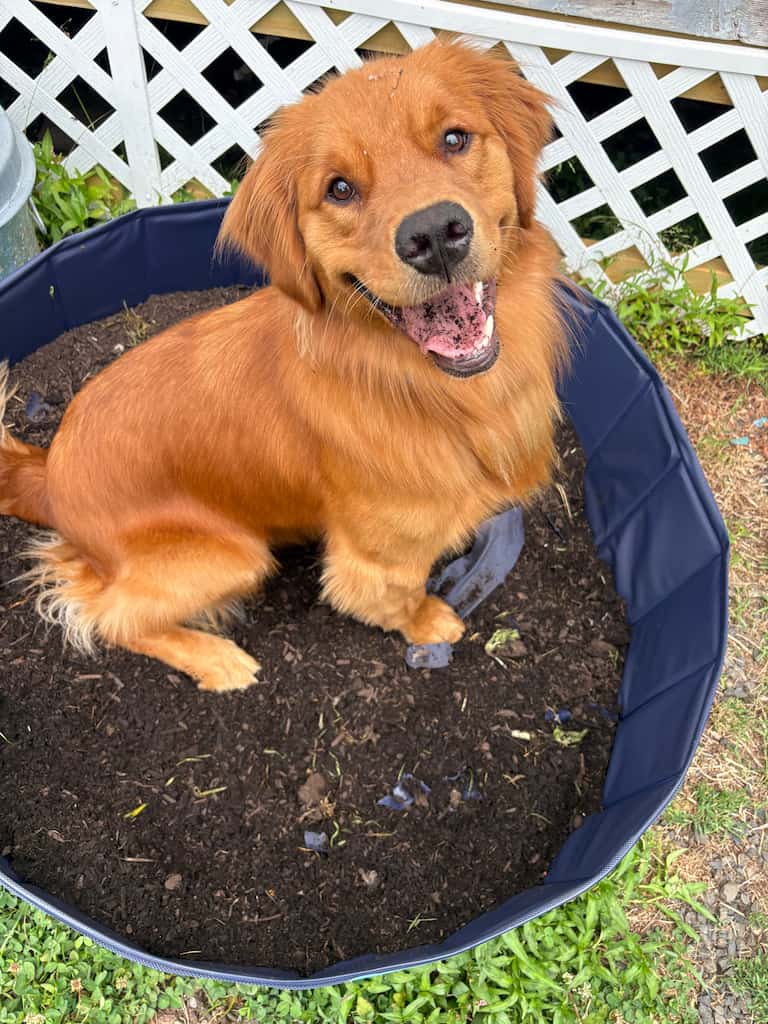
Cheese is a digger. Every single day, she was going straight for the lattice and getting to work. Despite how much it felt like it, this wasn’t due to spite or trying to drive me out of my mind (though we got close…). She was digging because it’s simply something Cheese was wired to do. It’s in her DNA.
We had two options: keep redirecting her and filling holes in indefinitely or actually give her a place where digging was allowed.
We opted for option 2 with $30 and a dream… and have no regrets!
What Is a Dig Pit?
A dig pit is exactly what it sounds like: a designated space where your dog is free to dig to their heart’s content. It gives them an appropriate outlet for a natural behavior, which means less frustration for you and a lot more fun for them.
For Cheese, we used a kiddie pool filled with topsoil. Simple, inexpensive, and it took maybe 20 minutes to set up.
Why a Dig Pit Can Reduce Unwanted Digging
Digging isn’t a behavior problem. It’s a natural, species-typical behavior that serves a lot of purposes for dogs: temperature regulation, hunting, burying objects, and just plain fun. When we try to eliminate natural behaviors entirely, we usually end up in a constant game of whack-a-mole. The behavior keeps coming back because the dog’s underlying need hasn’t been met.
A Dig Pit is a combination of enrichment and management. Instead of blocking the behavior, we redirect it somewhere appropriate and let the dog fulfill the need. This can result in a dog who’s less likely to take matters into their own paws (literally) elsewhere in the yard.
Cheese took the Dig Pit immediately and over the last two weeks has barely touched the lattice. The only time is when she rolls her beloved Chuckit! balls (seriously, they are her prized possession!) underneath but once we rescue it, she loses interest.
A Quick Note: Will This Work for Your Dog?
A dig pit works best when digging is the goal in itself. Dogs who dig out of boredom, because it’s satisfying, or because they’re just built that way (looking at you, terrier people) tend to take to it really well.
But digging is behavior, and behavior always has a function. If your dog is digging along the fence line to get to the neighbor’s dog, the digging isn’t really the point. Getting to that dog is the point. A dig pit in the middle of the yard probably isn’t going to scratch that itch, because it doesn’t address what’s actually driving the behavior.
Same goes for a dog who’s digging to escape, to reach something they can smell underground, or because they’re in a high state of arousal or anxiety. Those situations usually need a little more digging (pun intended) before enrichment alone will move the needle.
If you’re not sure what’s behind your dog’s digging, that’s a great thing to bring up with a trainer. Understanding the “why” is always step one!
How to Set Up a Dig Pit
You don’t need much:
- A kiddie pool (we used this one)
- Topsoil to fill it
- A dog with a nose and an agenda
Fill the pool with topsoil, bury a few things they love (bones, toys, etc.) and let them do the rest. Most dogs don’t need much encouragement. If they’re not sure what to do you can show them there’s something underneath!
A couple of things we’d do differently:
If we were setting this up again, we’d choose a pool with a hard bottom or cut the bottom out entirely so it sits directly on the ground. Cheese immediately dug through the bottom of the pool which wasn’t an issue except she then proudly trotted around the yard showing off her new ‘toy.’
Also, watch your dog closely the first few times. Some dogs, especially younger ones or those who are orally motivated, may try to eat the dirt. Most figure out pretty quickly that the dirt isn’t the fun part, the digging is, but it’s worth keeping an eye on until they get the hang of it.
Is This Right for Your Dog?
A dig pit is a great fit for:
- Dogs who dig in the yard
- Dogs who need more mental stimulation
- High energy dogs who need additional outlets
- Terriers, dachshunds, huskies, and other breeds with strong digging instincts (though honestly, any dog can benefit!)
It’s one of those enrichment ideas that looks almost too simple to work but once you see your dog happily ‘landscaping,’ you’ll wonder why you didn’t do it sooner.
We Can Help Save Your Sanity, Too!
Here’s the thing though: what works for one dog can flop for another. A high-drive teenager and a worried rescue need really different menus. That’s where we come in. We can help you figure out what actually fits your dog’s age, energy, and personality, so you’re not just throwing toys at the problem and hoping.
At Where Sit Happens, we believe a fulfilled dog is an easier dog to live with. Whether you’re looking for simple ways to enrich your dog’s day, are trying to change an unwanted behavior, or want a routine built around your specific needs, our team is here to help you figure out what actually works for your dog.
Contact us today to learn more about our training programs and let’s build an enrichment plan your dog will love!
(Heads up: some of the links above are Amazon affiliate links, which means we may earn a small commission if you buy through them (at no extra cost to you). As an Amazon Associate I earn from qualifying purchases. We only ever link to gear we genuinely love and use ourselves!)




0 Comments